

ADU Builder in Torrance, CA: South Bay Lots and an Independent Counter
Classic South Bay suburbia: single-family lots, an independent permit counter, and the state rulebook on your side.
What should you know before building an ADU in Torrance?
| Who reviews your plans | Torrance’s own Community Development / Planning Division, independent of LADBS |
| State-law floor | At least 800 sq ft must be allowed; 4-ft side/rear setbacks; ministerial (no-hearing) approval |
| The 2026 clock | Under SB 543, 15 days to deem your application complete, 60 days to decide |
| Best fit | Detached units and garage conversions on standard suburban lots |
| Where the rules live | Torrance Municipal Code Section 92.2.10, with a city ADU Plan Review and Permit Process handout alongside it |
| JADU paperwork | A JADU covenant must be completed, notarised and recorded with the LA County Registrar-Recorder before occupancy |
| Pre-approved plans | Not yet a catalog. The city is still accepting designer-owned plans for the program |
Torrance is what most people picture when they say South Bay: block after block of single-family homes with usable backyards and two-car garages. For ADU purposes that is close to ideal raw material. The city runs its own planning counter (your project never touches the LADBS queue), and California’s state ADU framework does the heavy lifting: ministerial approval, 4-foot setbacks, and since January 2026 a legal clock on how long the review can take.
How many ADUs actually get built in Torrance?
Torrance issued building permits for 172 ADUs in 2025, and 1,141 in total since 2018. These are the city’s own figures, filed with the State of California, not an estimate.
| Year | ADU building permits issued in Torrance |
|---|---|
| 2018 | 11 |
| 2019 | 39 |
| 2020 | 40 |
| 2021 | 103 |
| 2022 | 263 |
| 2023 | 301 |
| 2024 | 212 |
| 2025 | 172 |
For scale: ADUs were 39.5% of every home permitted in Los Angeles County in 2025 (nearly two in every five), and 25.9% of every home permitted statewide. Full city-by-city tables are on our California ADU statistics page.
Source: California Department of Housing and Community Development, Housing Element Annual Progress Report, Table A2, units with building permits issued. Retrieved August 2026.
What does an L Square ADU in Torrance look like?
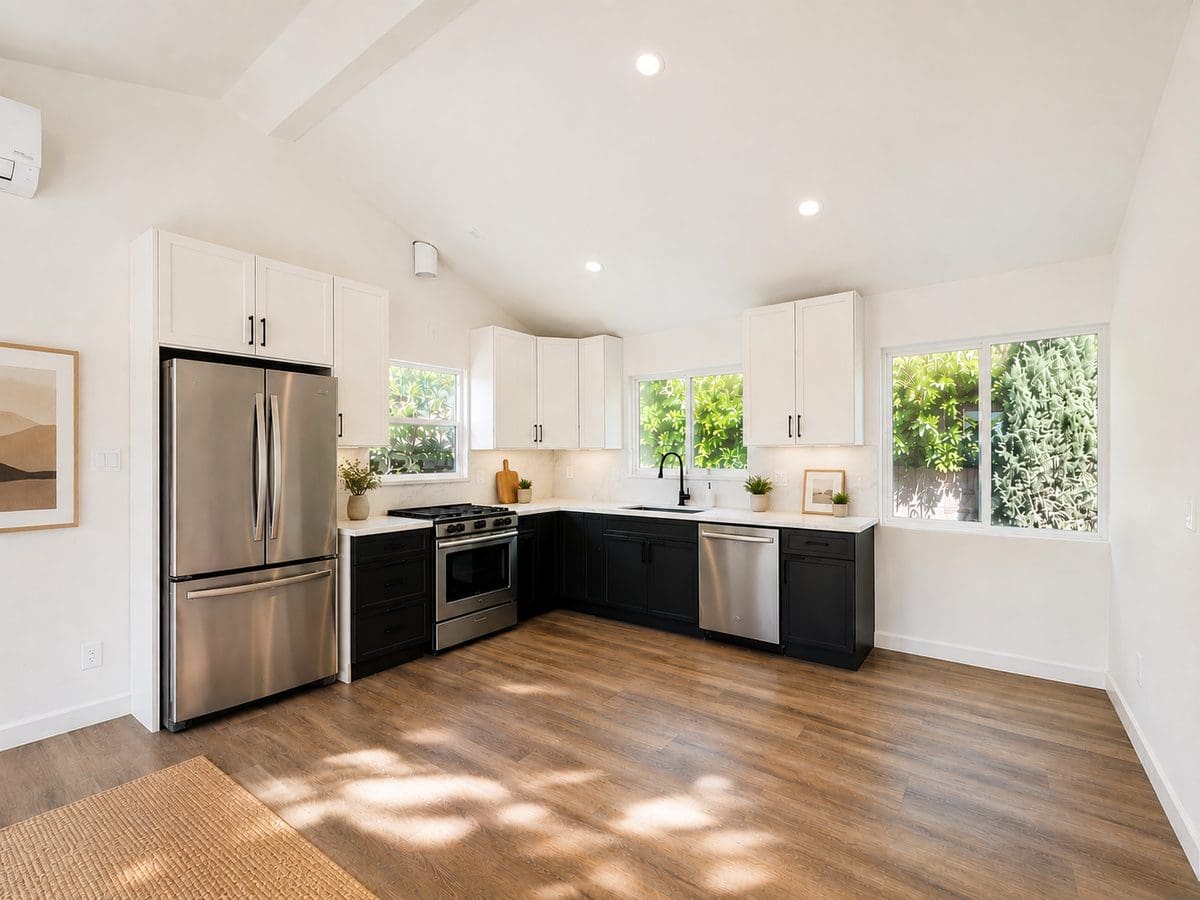
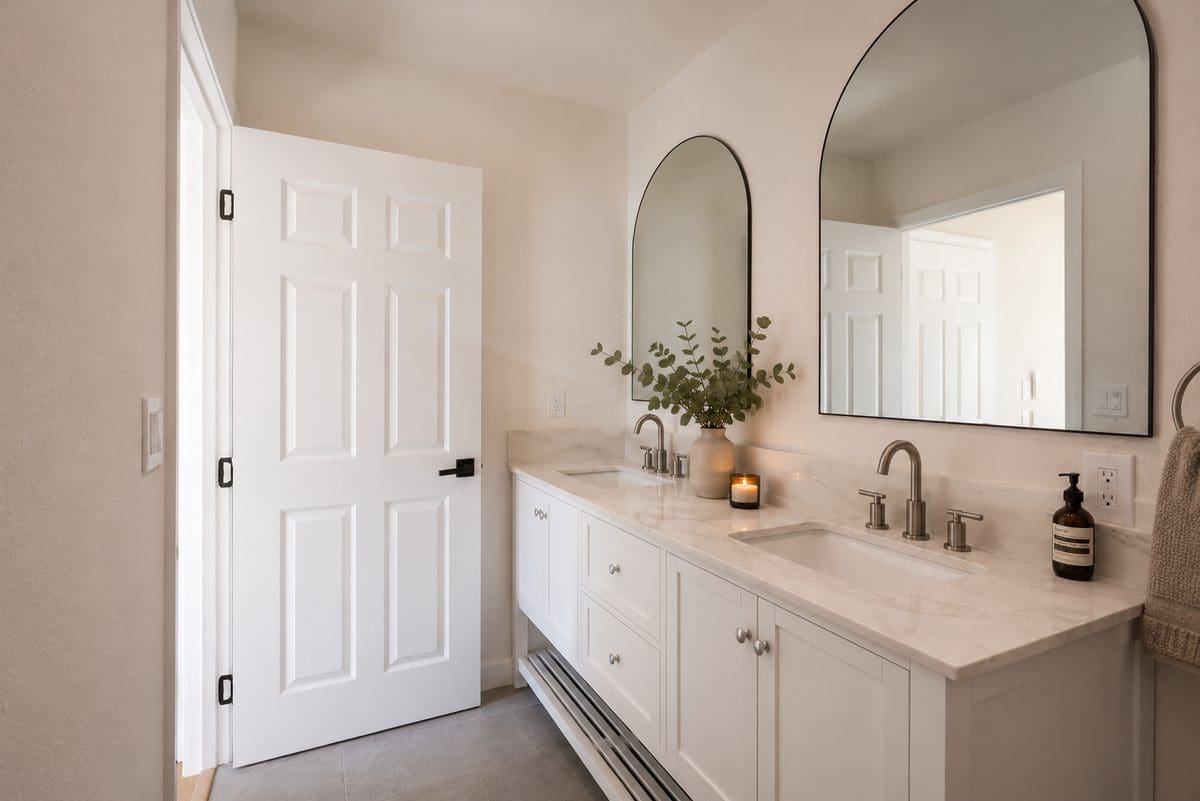
A finished detached ADU of ours in Torrance, with its own front door off the side yard, a vaulted-ceiling kitchen and a double-vanity bathroom. These are our own photos of the completed unit.

What does an ADU look like at each stage of the build?
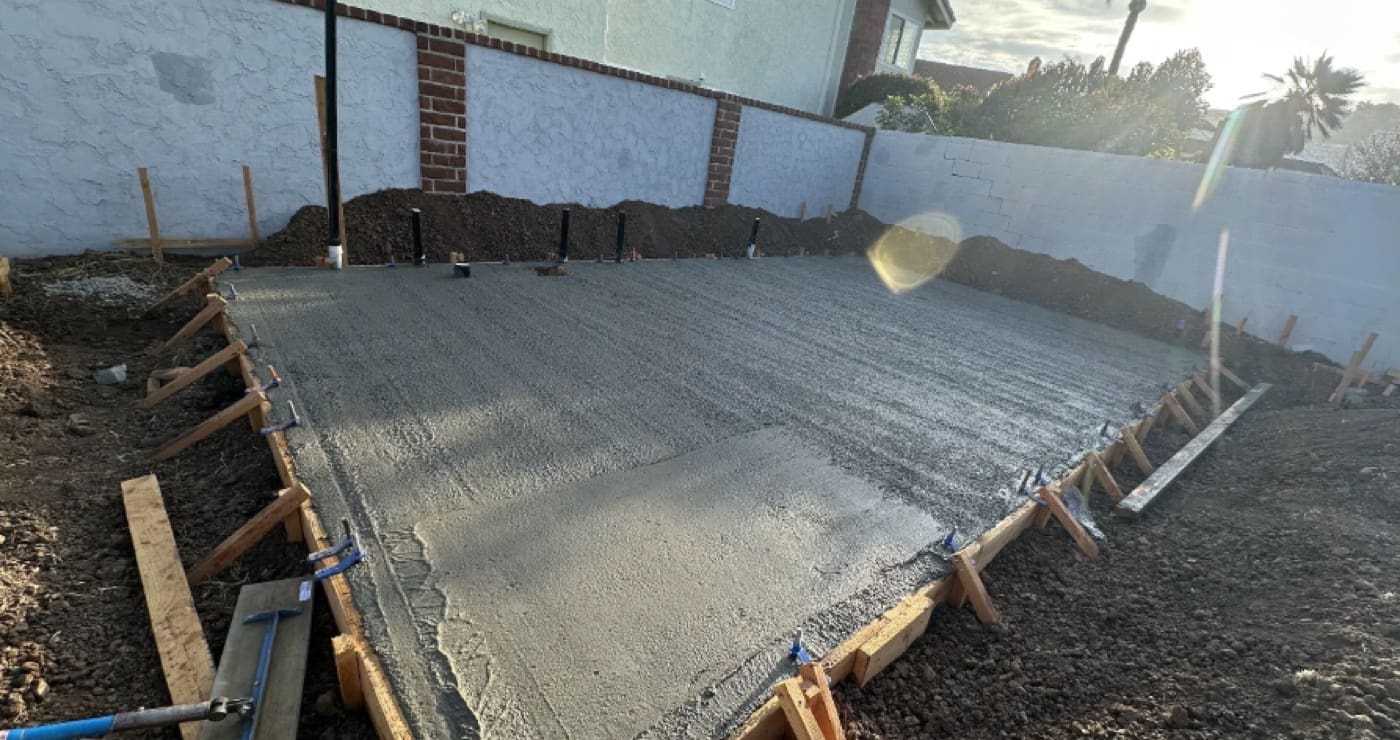
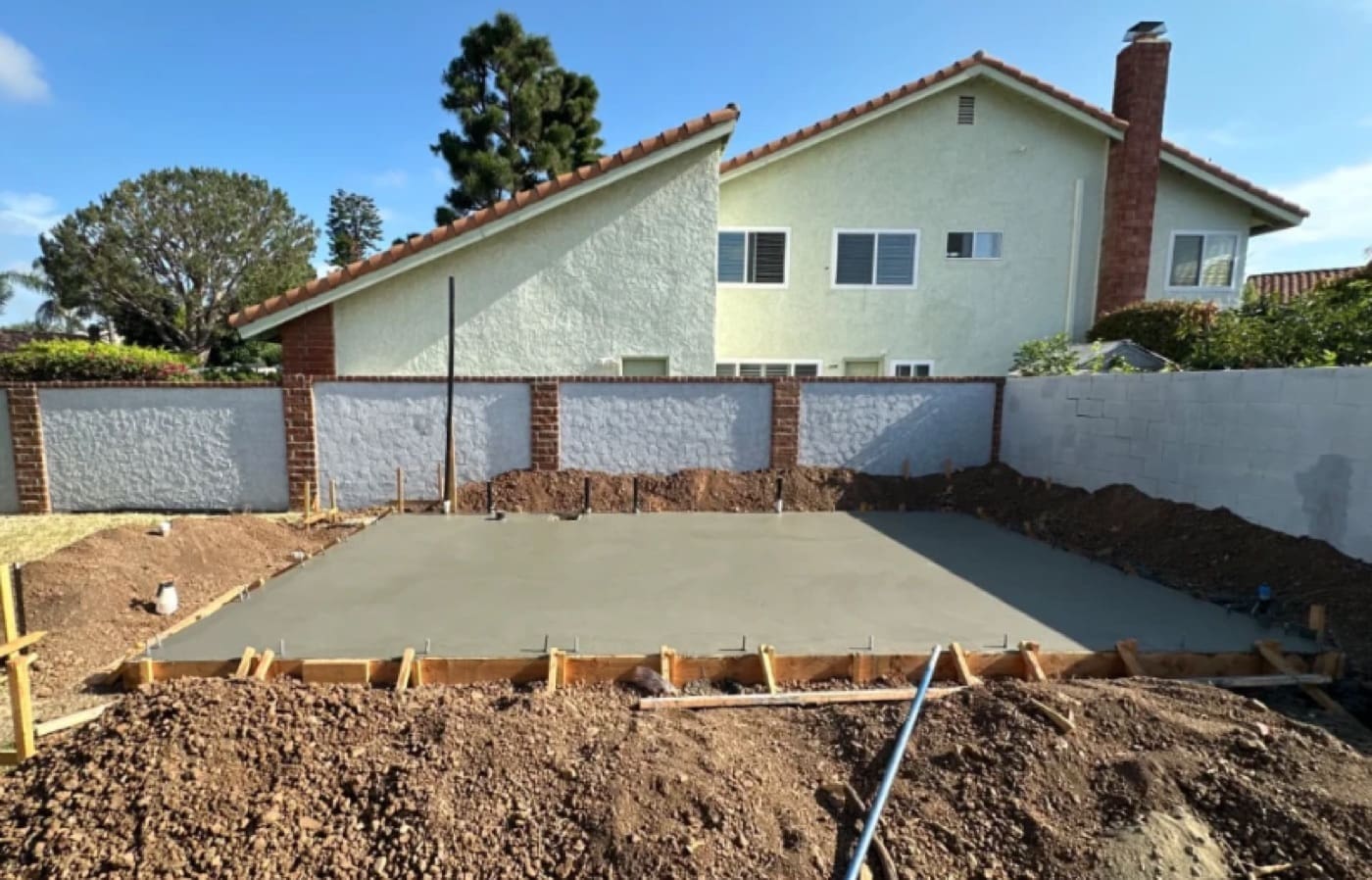
The photographs below are our own, taken on L Square job sites. Every caption states where and when the picture was taken. None of them are stock images or renderings, and none of them are presented as work in Torrance unless the caption says so. The sequence is the same on every project: forms and rebar, the pour, the cured slab, then framing.
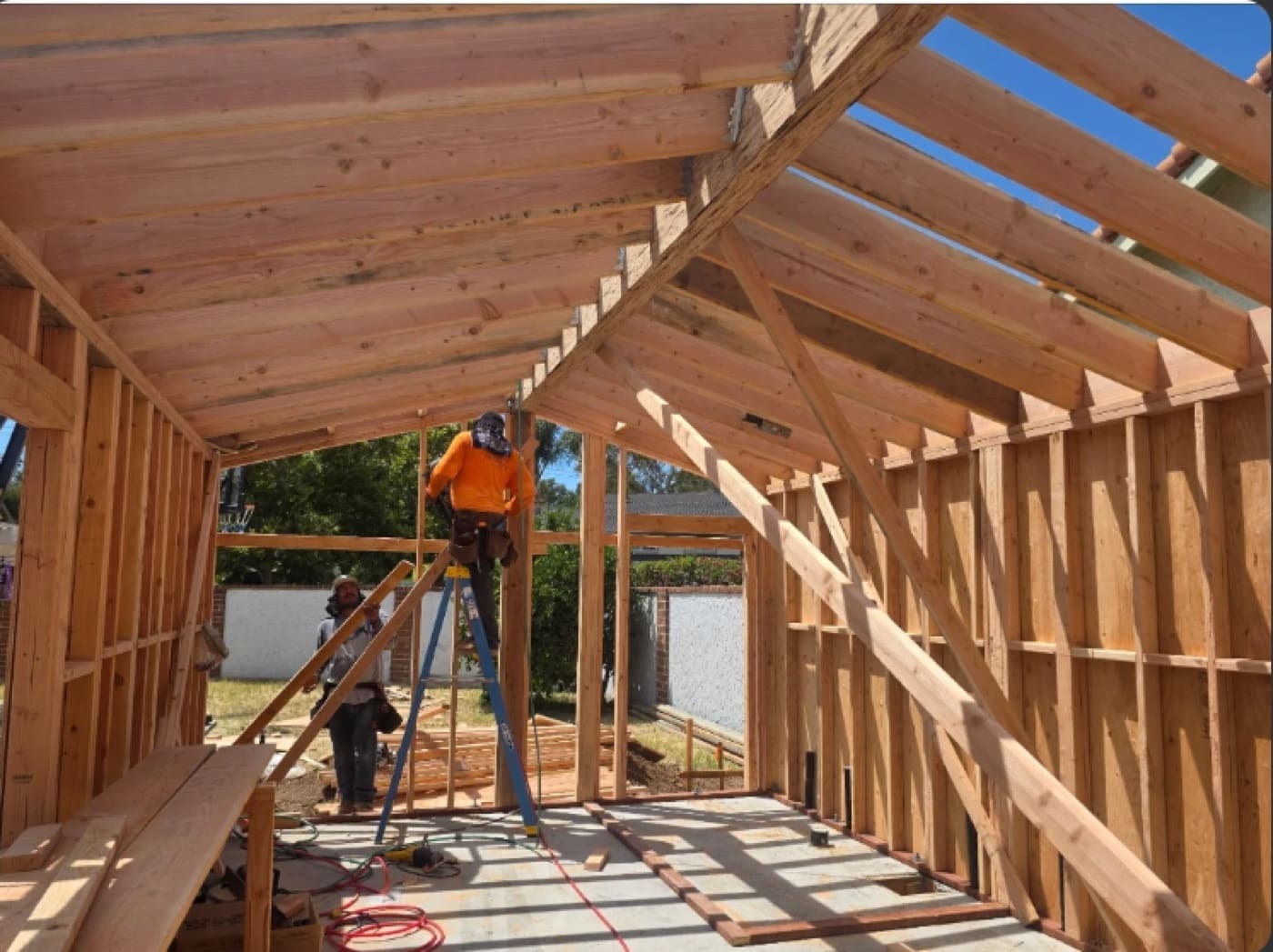
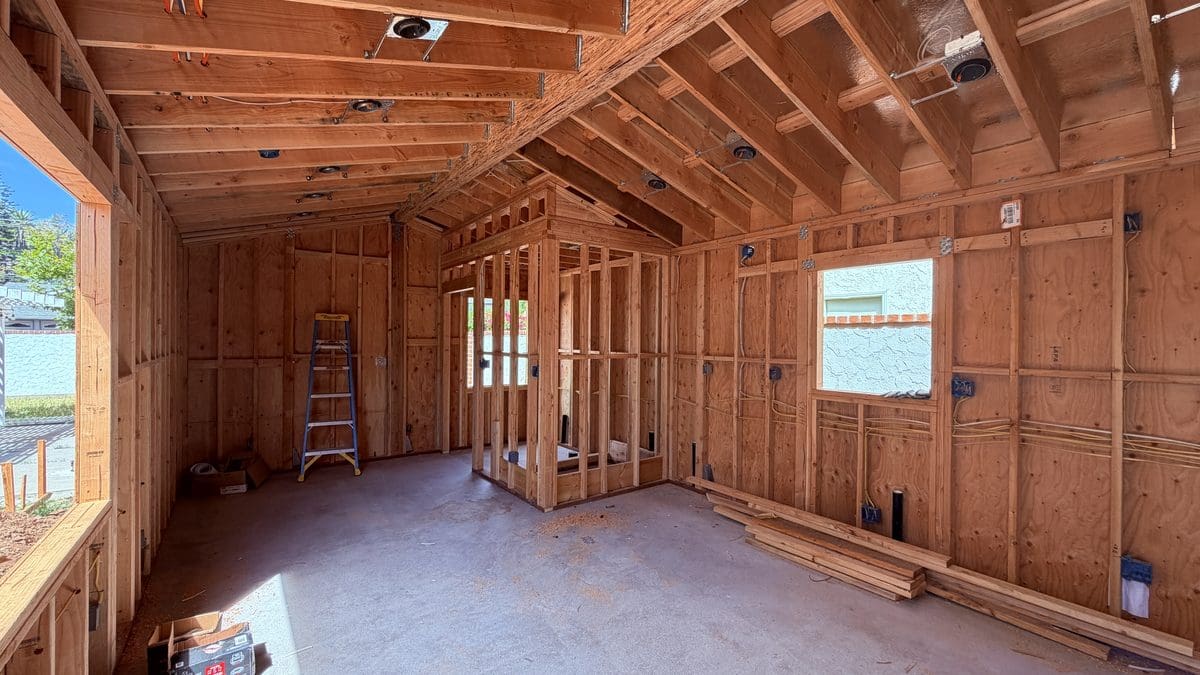
What does an ADU builder in Torrance actually do?
Working with an ADU design-build contractor in Torrance means one team carrying the project from the first site measurement through Section 92.2.10 compliance, plan check and construction. L Square develops the plan against the actual lot, prepares the permit package for the city’s Planning and Building & Safety divisions, and stays with the build through final inspection.
Start from the property rather than the picture: our floor plans show what fits typical South Bay lots, and the construction checklist sets out what happens at each stage. Compare the ADU cost guide before choosing between a detached custom build and a garage conversion ADU, and use the complete ADU guide for the sequence from feasibility to handover.
What is different about building an ADU in Torrance?
Honestly? Less than in most cities, and that is the selling point. Torrance projects tend to follow the state playbook without exotic local wrinkles: a code-compliant ADU is approved ministerially, no hearing, no neighbor veto. The variables that matter are the ones on your lot, where the sewer runs, what the garage slab looks like, how the unit sits against the setbacks.
The suburban lot pattern rewards the two classic plays. A detached unit in the backyard preserves the main house entirely and rents as a private home; a garage conversion reuses the existing structure at the published lower cost band. On Torrance’s typical lot sizes, both usually fit, which means the decision is about goals, not geometry.
And the state clock now protects your schedule: complete application deemed complete within 15 days, decision within 60. A clean, complete first submittal (our standard practice) means that clock works for you rather than around you.
Torrance keeps its ADU standards in Municipal Code Section 92.2.10 and publishes an ADU Plan Review and Permit Process handout to sit alongside it, which is more procedural guidance than most neighbouring cities offer. What Torrance does not have yet is a usable pre-approved plan catalog: the city is currently accepting submissions of designer-owned plans for the program, so unlike Whittier or Downey there is nothing on the shelf to pick from today. Custom design is the practical route here, which makes it a design-build question rather than a shopping one.
The Torrance detail that surprises homeowners is the junior ADU covenant. If your project includes a JADU, the owner must complete a covenant, have it notarised, and record it with the Los Angeles County Registrar-Recorder/County Clerk before the unit can be occupied. It is not difficult, but it sits outside the building permit and is easy to leave until the week you want to move someone in. Our junior ADU guide covers where a JADU beats a full ADU and where it does not, and the rules quick-reference table compares Torrance with the cities around it.
Torrance also publishes an ADU Plan Review and Permit Process handout, and it is the document to read first, not because the rules in it are unusual, but because it sets out the order operations happen in. A city’s published process tells you where the sequencing risk sits: which approvals run in parallel, which ones block the next step, and what a reviewer expects to already be answered when a package lands. The city notes an ADU Development Standards Table is still coming, so until it publishes, Section 92.2.10 and that handout are the two authoritative sources.
A note on how we approach Torrance lots specifically. The South Bay housing stock here runs to mid-century single-storey homes on regular lots, which is close to the ideal case for a detached ADU: usable rear yard, straightforward setbacks, and utility runs that do not have to cross the whole property. That is why the questions we ask on a first visit are rarely about the rules and almost always about the site, where the panel sits, where the sewer cleanout is, and whether a truck can reach the back. Those three answers move a Torrance budget more than any code section does.
A timing note on the pre-approved program: it is tempting to wait for the catalog to publish, and we would advise against it. The city is still in the intake stage of collecting designer-owned plans, there is no announced date, and a plan that eventually lands in the catalog still has to fit your particular lot. Meanwhile the state approval clocks apply to a custom submittal today. If your lot works now, the cost of waiting is a year of rent you did not collect, run the numbers in the ROI calculator before deciding the catalog is worth waiting for.
Two comparisons help. Long Beach runs no local ordinance at all and processes more ADUs per capita than anywhere in California, so its counter is the most practised; Lakewood applies objective standards closely. Torrance sits between them, with published standards in Municipal Code 92.2.10 and a pre-approved catalogue still being assembled rather than published.
What does California law guarantee an ADU owner in Torrance?
A city ordinance sits on top of state law, never underneath it. Four sections of the Government Code decide what Torrance can and cannot require of your project. Each one links to the full text on the Legislature’s own site, so you can read the wording rather than take our summary for it.
| GOV §66316 | A local ADU ordinance may contain only ministerial provisions. That is why a code-compliant ADU in Torrance gets no public hearing, no discretionary review and no neighbor veto. |
| GOV §66314 | Sets out what a local ordinance has to do, including designating where ADUs are allowed. It also carries the parking exemptions, so no replacement parking can be demanded when a garage becomes the unit. |
| GOV §66321 | A city may set minimum and maximum unit sizes, but it cannot impose a minimum square footage that blocks an ADU, and its maximum cannot be set below the state floor of 850 sq ft, or 1,000 sq ft for more than one bedroom. |
| GOV §66333 | Governs junior ADUs: up to 500 sq ft, created inside an existing single-family home, with a permit and a recorded deed restriction, and rented for terms longer than 30 days. |
If something a city asks for conflicts with these sections, the state text governs. That is worth knowing before you agree to redraw a plan set.
What does an ADU cost in Torrance?
Published ranges apply across our LA service area: garage conversions typically $90,000–$150,000, detached units $200,000–$450,000+. Full breakdown in the cost guide and the LA hub.
What actually decides the price on your lot?
Two identical floor plans on two Torrance streets can price differently, and the reason is almost never the city. It is these seven site conditions, which is why we quote after standing on the property rather than from an address.
| Electrical panel | Whether the existing service can carry a second dwelling, or the job needs a subpanel and a service upgrade. |
| Sewer route and distance | The trench length from the unit to the existing lateral, and whether the fall works or a pump is required. |
| Gas | Whether gas gets extended to the unit or the design goes all-electric, which changes both the trenching and the equipment. |
| New meters | Whether the utility wants separate meters, and the lead time that adds to the schedule. |
| Demolition | What has to come out before anything goes in, and whether something undocumented is sitting behind it. |
| Slope | Stepped foundations, retaining and engineered drainage. This is the most expensive category of site surprise in Southern California. |
| Access | Whether a truck and equipment can reach the back of the lot, or every yard of concrete and every sheet of drywall is carried by hand. |
Published model prices and the full range by size are on the Orange County ADU cost guide. The seven items above are what turn that range into a number for your property.
What will your Torrance lot allow?
Send the address and we will come back with what the lot allows and a free estimate.
What do Torrance homeowners ask most often?
Does Torrance use LADBS for ADU permits?
Do I need a public hearing for an ADU in Torrance?
How long can the city take to review my ADU?
Garage conversion or detached: which suits a Torrance lot?
Does Torrance have pre-approved ADU plans I can use?
What is the JADU covenant Torrance requires?
Where are the actual Torrance ADU rules written?
Can I convert my Torrance garage into an ADU?
What is Torrance Municipal Code Section 92.2.10?
Can I rent out my Torrance ADU once it is finished?
How many ADUs are permitted in Torrance each year?
Where can Torrance homeowners check the rules themselves?
Ready to start
your ADU?
Get a free, no-pressure quote from a licensed Orange County design-build team, and a plan drawn around your lot.