
Studio ADU in California: Size, Layout, and Cost | L Square
A studio ADU in California is a detached unit with an open living space, a bathroom, and a kitchen. State law has no studio category, so it is permitted as an ordinary ADU, where a detached build can reach 1,200 square feet and no city can cap it below 850.
What is a studio ADU in California?
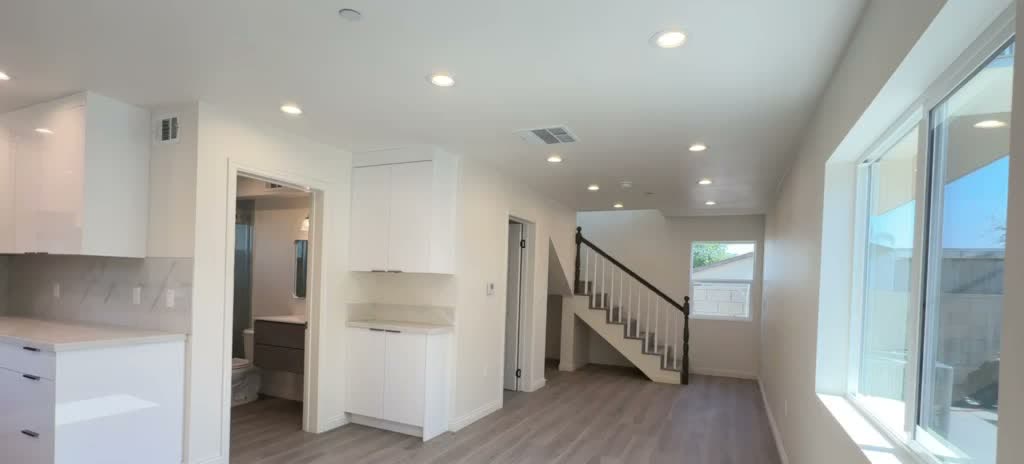
A studio ADU in California is a detached accessory dwelling unit that puts the living room, kitchen and sleeping area in one open room, with a separate bathroom and its own entrance. California statutes never use the phrase studio ADU, so the unit is permitted as an ordinary accessory dwelling unit under Government Code Section 66314 and reviewed the same way.
State law defines the unit by what it provides rather than by its room count. Section 66313(a) describes an accessory dwelling unit as an attached or detached residential dwelling unit that provides complete independent living facilities for one or more persons, with permanent provisions for living, sleeping, eating, cooking and sanitation on the same parcel as the primary dwelling.
Layout is what separates a studio from the rest of the ADU lineup. The bathroom and the kitchen stay as their own rooms, and the walls between living, dining and sleeping come out, so the same square footage carries more usable area. That trade is the reason a smaller footprint can still work as a home office, a guest suite or a one-person rental.
The unit may be rented separate from the primary residence. Section 66314(d)(1) allows that and forbids selling the unit on its own, and Section 66315 bars a local owner-occupant requirement while allowing a city to require rental terms of 30 days or longer.
- One open room holds the living area, kitchen and sleeping area
- A separate full bathroom keeps the plan legal and rentable
- A private entrance lets the unit work on its own
- A studio is a layout, not a permit category
How small can a studio ADU be in California?
The smallest unit a California city has to allow is the efficiency unit floor, and Health and Safety Code Section 17958.1(a) sets it at 150 square feet of minimum floor area for occupancy by no more than two persons, with partial kitchen or bathroom facilities as the ordinance specifies. Section 66321(b)(1) closes the other side of that door: a city may not adopt a minimum square footage requirement that prohibits an efficiency unit.
Above that floor, the workable size of a studio is set by the site rather than by law. A studio has to carry a foundation, a sewer route, a wall on the required side and rear setbacks and a space for a bedroom door, so a narrow lot or a sloped one can rule out a size that looks comfortable on paper.
Two legal ceilings matter more than the floor. Section 66314(d)(5) caps a detached accessory dwelling unit at 1,200 square feet of total floor area, and Section 66321(b)(2) sets the floor for a local maximum size cap at 850 square feet of interior livable space, or 1,000 square feet when the unit has more than one bedroom. A studio sits under both of those numbers, so it is not the size that trips a local rule.
- 150 square feet: efficiency unit floor under Health and Safety Code 17958.1(a)
- 500 square feet: ceiling on a junior accessory dwelling unit under Section 66313(d)
- 850 square feet: floor for a local maximum size cap under Section 66321(b)(2)
- 1,200 square feet: ceiling for a detached ADU under Section 66314(d)(5)
Which size should I pick for a studio ADU?
Size decides what a studio can hold. L Square Design & Build publishes a plan catalog of real 3D models that a homeowner can open, walk through and send for an estimate, and the two plans at the studio end of that catalog are the 400 square foot studio and the 520 square foot one-bedroom. The team works on Orange County and Los Angeles County lots.
The table lists those two plans with their published square footage, room count and footprint, read from the plan catalog at lscontractor.com/adu-plans/. The 400 square foot plan is a true studio with one bathroom on a 20 foot by 20 foot footprint, and the 520 square foot plan trades the second room for a bedroom.
One caution on the numbers. Section 66313(e) defines livable space as space intended for human habitation, and Section 66313(f) defines living area as interior habitable area that excludes a garage or any accessory structure. The 850 and 1,000 square feet floors in Section 66321(b)(2) and the 750 square feet impact fee line in Section 66311.5(c)(1) are written against interior livable space, not against the total area printed on a plan sheet.
| Plan | Square footage | Rooms | Footprint |
|---|---|---|---|
| LSQ 400 | 400 sq ft | Studio, 1 bath | 20' x 20' |
| LSQ 500 | 520 sq ft | 1 bed, 1 bath | 20' x 26' |
What can your lot allow?
Send your address for a site-specific ADU feasibility review and estimate.
Do I need parking for a studio ADU in California?
A city usually cannot ask for more than one space. Section 66314(d)(10) caps a parking requirement at one space per accessory dwelling unit or per bedroom, whichever is less, allows those spaces to be tandem parking on a driveway, and permits offstreet parking in setback areas unless the city makes specific findings on site conditions or fire and life safety.
Section 66322(a) removes the parking standard altogether in six cases: an ADU within one-half mile walking distance of public transit, an ADU in an architecturally and historically significant historic district, an ADU that is part of the primary residence or an accessory structure, a lot where on-street parking permits are required but not offered to the occupant, a lot with a car share vehicle within one block, and an application filed together with a new single-family or multifamily dwelling on the same lot.
A studio often gives a parking space back rather than taking one. Section 66314(d)(11) says a local agency shall not require that offstreet parking spaces be replaced when a garage, carport, covered parking structure or uncovered parking space is demolished with the ADU or converted into one.
What will a studio ADU cost after fees and permits?
L Square publishes six configured model prices on its ADU cost guide at lscontractor.com/adu-cost-orange-county/: Model 600 at $180,000, Model 800A and Model 800B at $240,000 each, Model 1000A and Model 1000B at $295,000 each, and Model 1200 at $354,000 as published on that page. The cost guide was read on November 13, 2026 and lists those figures as configured model prices rather than final project totals. The same page states that categories outside the six configured models require a property-specific proposal, and the Pasadena project page states that every lot prices differently.
Two fee thresholds decide the bill. Section 66311.5(c)(1) says a local agency, special district or water corporation shall not impose any impact fee on an ADU of 750 square feet of interior livable space or less, and any impact fee charged on a larger ADU is charged proportionately in relation to the square footage of the primary dwelling. Section 66311.5(c)(3) treats an ADU or junior accessory dwelling unit that contains less than 500 square feet of interior livable space as other residential construction that does not increase assessable space by 500 square feet for the school fee test in Education Code Section 17620.
Utility connections follow Section 66311.5. Subdivision (b) says an ADU is not a new residential use for calculating water and sewer connection fees unless it was built with a new single-family dwelling. Subdivision (e) lets an agency require a new or separate utility connection for a detached unit, with the charge set in proportion to the unit's square footage or its drainage fixture unit values, and the charge cannot exceed the reasonable cost of providing the service.
How long does it take to get a studio ADU permit in California?
The clock is set by statute. Section 66317(a)(1) requires a permit application for an accessory dwelling unit to be considered and approved ministerially, without discretionary review or a hearing. Section 66317(a)(2)(A) requires the permitting agency to decide whether the application is complete and give written notice of that decision no later than 15 business days after receiving it, and Section 66317(a)(2)(F) treats the application as complete when the agency misses that deadline.
Section 66317(a)(3) requires the agency to approve or deny a completed application within 60 days. If the applicant asks for a delay, the 60 days pauses for the length of that delay, and if the agency has neither approved nor denied the completed application within 60 days, the application is deemed approved.
A denial comes with a written list. Section 66317(b) requires the agency to return a full set of comments with a list of items that are defective or deficient and a description of how the applicant can remedy them, and Section 66317(d) gives the applicant an appeal path with a final written determination no later than 60 business days after the written appeal is received.
- 15 business days for the completeness determination under Section 66317(a)(2)(A)
- 60 days to approve or deny a completed application under Section 66317(a)(3)
- Deemed approved if the agency does not act within 60 days
- 60 business days for the final written decision on an appeal under Section 66317(d)(2)
Project evidence
- The Pasadena project page documents a completed 700 square foot single story L Square detached ADU with a vaulted ceiling, a clerestory window and an open living and kitchen area. The project is our own evidence for what a small single story footprint holds when the roof pitch is carried inside the room. Project evidence
Related L Square guides
Authoritative sources
- California Government Code section 66313, definitions of accessory dwelling unit, efficiency unit, junior accessory dwelling unit and livable space — California Legislative Information
- California Government Code section 66314, ADU development standards including the 1,200 square foot detached cap and parking limits — California Legislative Information
- California Government Code section 66315, no owner-occupant requirement and the 30 day rental term rule — California Legislative Information
- California Government Code section 66317, ministerial approval with the 15 business day and 60 day timelines — California Legislative Information
- California Government Code section 66321, minimum size floors, the 850 and 1,000 square foot limits and detached ADU height — California Legislative Information
- California Government Code section 66322, parking standards that do not apply to an ADU — California Legislative Information
- California Government Code section 66311.5, impact fees and utility connections for ADUs — California Legislative Information
- California Health and Safety Code section 17958.1, efficiency unit floor area and occupancy — California Legislative Information
Frequently asked questions
What is the smallest studio ADU I can build in California?
The floor is the efficiency unit. Health and Safety Code Section 17958.1(a) sets a minimum floor area of 150 square feet for an efficiency unit occupied by no more than two persons, and Section 66321(b)(1) bars a city from adopting a minimum square footage requirement that prohibits an efficiency unit. A studio that works day to day is usually larger than that floor, because it needs a kitchen, a bathroom and a sleeping area.
Is a studio ADU the same as a JADU in California?
No. A junior accessory dwelling unit is a legal category, and Section 66313(d) limits it to no more than 500 square feet of interior livable space contained entirely within a single-family residence. Studio is a floor plan description. A detached studio built in the yard is an ordinary ADU under Section 66314, whatever its layout.
Do I need parking for a 400 square foot studio ADU?
Section 66314(d)(10) caps any parking requirement at one space per ADU or per bedroom, whichever is less, and Section 66322(a) removes the parking standard in six cases, including an ADU within one-half mile walking distance of public transit and an ADU that is part of the primary residence or an accessory structure. A city also cannot require replacement parking when a garage is demolished for the ADU, under Section 66314(d)(11).
Can I rent out a studio ADU without living on the property?
Yes for the ADU itself. Section 66314(d)(1) allows the unit to be rented separate from the primary residence but not sold on its own, and Section 66315 bars a local owner-occupant requirement while allowing a city to require rental terms of 30 days or longer. Those rules apply to a detached studio built as an ADU, not to a junior accessory dwelling unit.
Does a studio ADU pay impact fees in California?
It depends on interior livable space. Section 66311.5(c)(1) says no impact fee may be imposed on an ADU of 750 square feet of interior livable space or less, and a larger ADU is charged proportionately to the primary dwelling. Section 66311.5(c)(3) treats an ADU under 500 square feet of interior livable space as other residential construction for the school fee test in Education Code Section 17620.
How long does a studio ADU permit take in California?
A permitting agency must give written notice on completeness no later than 15 business days after receiving the application, and must approve or deny a completed application within 60 days, with the application deemed approved if the agency does not act. If the applicant asks for a delay, the 60 days pauses for the length of that delay.
Where we build
Talk through your project
L Square Design & Build serves Orange County and Los Angeles homeowners with design, permits, and construction under one roof.
Review a studio ADU plan for your lot